The Wars of the Jews; Or, The History of the Destruction of Jerusalem by Josephus

(4 User reviews)   415
Josephus, Flavius, 38?-100? Josephus, Flavius, 38?-100?
English
Imagine you're watching the most epic disaster movie ever made, but it's real history. That's Josephus's account of the Jewish-Roman War. This isn't just a dry history book; it's a front-row seat to the brutal, chaotic, and heartbreaking siege of Jerusalem in 70 AD. Written by a man who was there—first as a Jewish commander, then as a Roman prisoner—it gives you a perspective you can't find anywhere else. He explains why his people rose up against Rome and how it all went so terribly wrong. It's a story of faith, fanaticism, and the shocking cost of rebellion.
Share

Read "The Wars of the Jews; Or, The History of the Destruction of Jerusalem by Josephus" Online

This book is available in the public domain. Start reading the digital edition below.

START READING FULL BOOK
Instant Access    Mobile Friendly

Book Preview

A short preview of the book’s content is shown below to give you an idea of its style and themes.

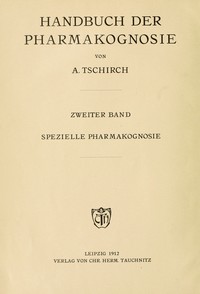
Handelswaren, sowie Personen- und Ortsnamen sind nicht einheitlich. Das Original wurde in Frakturschrift gesetzt; besondere Schriftschnitte werden im vorliegenden Text mit Hilfe der folgenden Sonderzeichen gekennzeichnet: kursiv: _Unterstriche_ fett: =Gleichheitszeichen= gesperrt: +Pluszeichen+ Kapitälchen: ~Tilden~ Das Caret-Symbol (^) steht für ein nachfolgendes hochgestelltes Zeichen. Tiefgestellte Zeichen werden in geschweifte Klammern gesetzt; zusätzlich wird noch ein Unterstrich vorangestellt, wie z.B. bei der Angabe des spezifischen Drehwinkels [α]_{D}. #################################################################### HANDBUCH DER PHARMAKOGNOSIE VON A. TSCHIRCH ZWEITER BAND SPEZIELLE PHARMAKOGNOSIE [Illustration] LEIPZIG 1912 VERLAG VON CHR. HERM. TAUCHNITZ HANDBUCH DER PHARMAKOGNOSIE VON A. TSCHIRCH ERSTE ABTEILUNG MIT 237 ABBILDUNGEN IM TEXT UND AUF EINGEHEFTETEN TAFELN, SOWIE 3 KARTEN [Illustration] LEIPZIG 1912 VERLAG VON CHR. HERM. TAUCHNITZ Das Recht der Übersetzung in fremde Sprachen ist vorbehalten DIE VERLAGSHANDLUNG Inhaltsübersicht zur ersten Abteilung des zweiten Bandes. Seite Einleitung 3 I. =Kohlehydratdrogen= (A bis D umfassen die Süßstoffdrogen) 6 A. +Drogen, die einen Zucker oder einen verwandten Süßstoff mit sechs Kohlenstoffatomen enthalten.+ a) Drogen, die Hexosen als Monosaccharide enthalten 6 Invertzuckerdrogen. Drogen, welche vorwiegend aus Invertzucker bestehen oder viel Invertzucker enthalten 8 α) _Mel_ 8 β) Blüten _Flos Verbasci_ 15 _Bassiablüten_ 23 γ) Früchte und Fruchtstände _Caricae_ 24 _Dactyli_ 35 _Passulae_ 39 δ) Zu Roobs oder Pulpen verarbeitete Früchte 43 _Fruct. Juniperi_ 44 _Fruct. Sambuci_ 53 _Fruct. Pruni_ 57 _Fruct. Jujubae_ 60 _Sebesten_ 61 _Fruct. Myrtilli_ 62 ε) Frische, zu Sirupen verarbeitete Früchte. _Fruct. Rubi idaei_ 65 _Fruct. Rubi fruticosi_ 70 _Fruct. Cerasi acidi_ 71 _Fruct. Mori_ 74 b) Drogen, die Sorbit enthalten 76 c) Drogen, die Glukuronsäure enthalten 76 _Rad. Liquiritiae_ 77 _Succus Liquiritiae_ 93 d) Drogen, welche Mannit enthalten. 1. _Eschenmanna_ 103 2. _Australisches Manna_ 113 3. _Platanus-Manna_ 113 4. _Manna von den Capverdischen Inseln_ 113 5. _Harlálumanna_ 113 6. _Olivenhonig_ 113 e) Drogen, welche Dulcit enthalten 113 _Madagaskar-Manna_ 114 B. +Drogen, welche Disaccharide von Hexosen enthalten+ 114 1. Rohrzuckergruppe. I. Drogen, welche aus Rohrzucker bestehen. Saccharum I. _Rohrzucker aus Zuckerrohr_ 117 II. _Rübenzucker_ 122 III. _Ahornzucker_ 126 IV. _Palmzucker_ 128 V. _Sorghumzucker_ 129 VI. _Andere Rohrzucker liefernde Materialien_ 130 II. Rohrzucker enthaltende Mannaarten. a) _Alhagi-Manna oder Terendschabin_ 131 b) _Tabaschir_ 132 c) _Californisches Manna_ 133 d) _Blue Grass Manna_ 133 e) _Weidenmanna oder Bide Khecht_ 133 f) _Eichenmanna oder Gueze-elefi_ 133 g) _Schîr-Khist_ 134 h) _Tamarixmanna_ 135 III. Rohrzuckerfrüchte. _Fructus Ceratoniae_ 136 2. Trehalosegruppe. _Trehalamanna_ 147 3. Milchzuckergruppe. _Milchzucker_ 148 C. +Drogen, welche Trisaccharide enthalten.+ a) _Eucalyptus-Manna_ 151 b) _Lärchen-Manna_ 151 D. +Drogen, welche Tetrasaccharide enthalten+ 152 E. +Polysacchariddrogen+ (keine Süßstoffdrogen, I-VII Inhaltsbestandteile, VIII Membranine). α) Zellinhaltsbestandteile. I. Stärkegruppe. I. Stärke aus unterirdischen Organen. a) _Amylum solani_ 158 b) Arrowroots 165 1. _Westindisches Arrowroot_ 166 2. _Maniok_ 171 3. _Ostindisches Arrowroot_ 174 4. _Queensland Arrowroot_ 175 5. _Tahiti Arrowroot_ 176 6. _Guyana Arrowroot_ (und _Bananenstärke_) 176 7. _Batatenstärke_ 177 8. _Arumstärke_ 178 9. _Costarica Arrowroot_ 178 10. _Japanisches Arrowroot_ 178 II. Stärke aus Stämmen. 1. _Sago_ 178 2. _Andere Palmen-_ (und _Cycadeen-_)_Stärke_ 184 III. Stärke aus dem Endosperm von Samen. 1. _Amylum Tritici_ 184 2. _Amylum Oryzae_ 189 3. _Amylum Maidis_ 194 4. _Fructus Hordei_ 197 IV. Stärke aus den Cotyledonen von Samen. _Leguminosenstärke_ 198 II. Amylodextringruppe 198 _Macis_ 199 III. Dextringruppe _Dextrin_ 200 IV. Inulindrogen 201 Kompositenwurzeln 202 _Rad. Cichorei_ (Cichorienkaffee) 202 _Rad. Taraxaci_ 207 _Rad. Bardanae_ 216 V. Lävulindrogen 218 VI. Triticindrogen 218 _Rhiz. Graminis_ 218 VII. Scillin-(Sinistrin-)Drogen 224 β) Membraninbildende Substanzen. VIII. Polysaccharide vom Charakter der Membranine. Membranin-Drogen 224 A. Zellulosindrogen 226 1. Celluloso-Membranin-Drogen 227 _Gossypium_ 229 _Pili haemostatici_ 246 Die Fasern 250 +Von Haaren gebildet+: _Baumwolle_, _Pflanzendunen_, _Pflanzenseiden_, _Einheimische Wollhaare_ 253 +Pflanzliche Bastfasern+: 253 _Lein_, _Hanf_, _Sunn_, _Nessel_, _Chinagras_, _Jute_, _Gambohanf_, _Neuseeländ. Flachs_, _Manilahanf_, _Pitafaser_, _Aloëhanf_, _Coir_ 254 _Papier_ 256...

This is a limited preview. Download the book to read the full content.

Okay, let's be real. This isn't a light beach read. But if you're curious about one of the most pivotal events in ancient history, it's absolutely gripping.

The Story

This book is Josephus's first-hand account of the massive Jewish revolt against the Roman Empire, which culminated in the total destruction of Jerusalem and its famous Temple in 70 AD. He starts by setting the stage, explaining the political and religious tensions that led to the explosion. Then, he takes you through the war itself—the battles, the infighting among different Jewish factions, and the horrifying, drawn-out siege of the city by the future Emperor Titus. The level of detail about the starvation, the desperate fighting, and the final, catastrophic fire is staggering.

Why You Should Read It

What makes it so compelling is Josephus himself. He's a complicated, controversial narrator. He fought for the Jewish cause, was captured, and then switched sides, living out the war with the Romans. So you get this incredible insider/outsider view. He's trying to explain his people to a Roman audience while also wrestling with the tragedy. You feel his conflict. It's history written with raw emotion and personal stakes, which is rare for something this old.

Final Verdict

This is perfect for anyone who loves deep-dive history, ancient military strategy, or stories of incredible human drama. If you've ever read about Rome or the Bible and wondered 'What really happened there?', this is your primary source. It's challenging at times, but it reads like the most intense eyewitness report you'll ever find from the ancient world. Just be prepared—it doesn't pull any punches.


📜 Usage Rights

No rights are reserved for this publication. It is now common property for all to enjoy.

Charles Baker
1 month ago

I almost skipped this one, yet the examples used throughout the text are practical and relevant. I will be reading more from this author.

Oliver Ramirez
5 months ago

After hearing about this multiple times, the depth of overage exceeded my expectations. This made complex ideas feel approachable.

Jennifer Brown
1 week ago

From a technical perspective, it manages to explain difficult concepts in plain English. I learned so much from this.

John Baker
2 weeks ago

I picked this up late one night and the writing style is poetic but not overly flowery. Time very well spent.
4.5
4.5 out of 5 (4 User reviews )

Add a Review

Your Rating *
There are no comments for this eBook.
You must log in to post a comment.
Log in

Related eBooks